
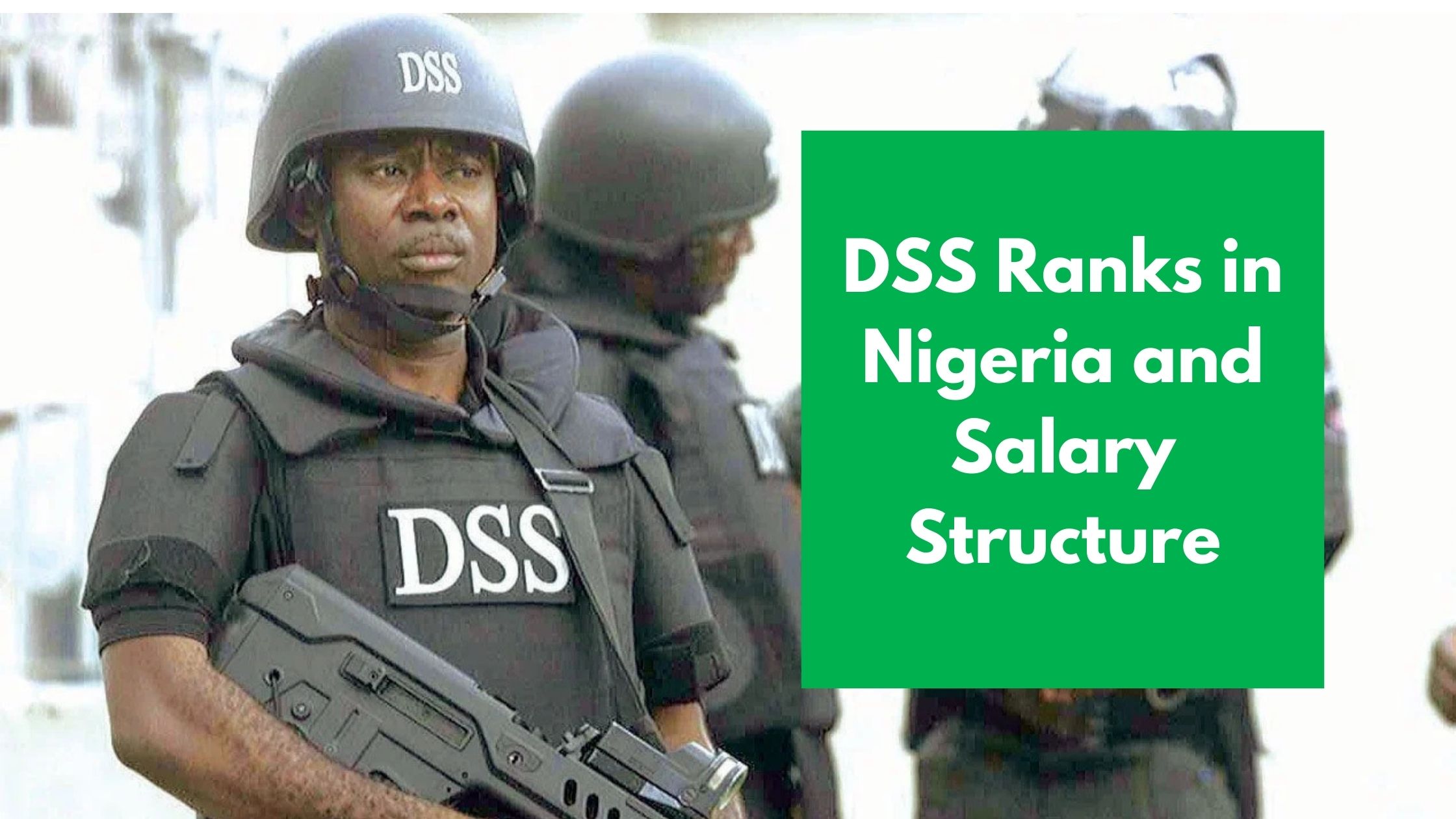
DSS Ranks in Nigeria and Salary Structure
The Department of State Service (DSS) in Nigeria is a security agency with the sole purpose of providing security to the nieria citizens and addressing domestic security concerns.
They focus mainly on gathering intelligence, counterintelligence operations, and internal security. There are multiple DSS ranks in Nigeria, with one having a distinctive level of authority.
As someone who wishes to join the Department of State Service (DSS) either to contribute to the nation’s security or maybe you just want to pursue a career, it is important you understand the organization’s ranks and how each DSS rank in Nigeria is compensated.
Structure of the DSS ranks in Nigeria.
Similar to the military, the DSS follows a paramilitary rank system that has a clear progression path. This is how they break down;
1. Non-Commissioned Officers (NCOs)
- Recruit / Training Cadet
- Private Officer
- Lance Corporal
- Corporal
- Sergeant
- Staff Sergeant
2. Commissioned Officers (Junior to Mid-Level)
- Second Lieutenant
- Lieutenant
- Captain
- Major
- Lieutenant Colonel
- Colonel
3. Senior / Top Officers
- Brigadier General
- Major General
- Director
- Director-General (DG of DSS)
RECOMMENDED==> The Nigerian Navy Batch 39 recruitment Form/Portal 2026/2027
DSS Salary Structure in Nigeria
The DSS salary system follows the consolidated paramilitary salary structure (CONPASS). What this means is, your salary increases based on your rank, your year of service, and the qualifications you possess.
| DSS Rank in Nigeria | Estimated Monthly Salary |
| Recruit / Cadet | ₦70,000 – ₦90,000 |
| Private Officer | ₦90,000 – ₦110,000 |
| Lance Corporal | ₦110,000 – ₦130,000 |
| Corporal | ₦130,000 – ₦150,000 |
| Sergeant | ₦150,000 – ₦170,000 |
| Staff Sergeant | ₦170,000 – ₦200,000 |
| Second Lieutenant | ₦180,000 – ₦200,000 |
| Lieutenant | ₦200,000 – ₦220,000 |
| Captain | ₦220,000 – ₦250,000 |
| Major | ₦270,000 – ₦300,000 |
| Lieutenant Colonel | ₦300,000 – ₦350,000 |
| Colonel | ₦350,000 – ₦400,000 |
| Brigadier General | ₦400,000 – ₦450,000 |
| Major General | ₦450,000+ |
| Director | ₦500,000 – ₦600,000 |
| Director-General (DG) | ₦1,500,000 – ₦2,000,000+ |
Additional DSS Allowances and Benefits
There are so many additional benefits that come with being a DSS officer; you get to enjoy allowances and incentives from the government depending on your rank in office. Some of the bonuses that yiu get to enjoy include
- Risk Allowance – this is only assigned to officers who operate in a very high-risk zone
- Transport Allowance – this type of allowance may vary depending on your area of duty
- Medical Benefits – an allowance that covers your medical fees for both yiu and your dependents
- Housing Allowance – based on your rank and city, an allowance might be given
- Duty Tour Allowance (DTA) – this allowance is for official travels and investigations.
- Uniform and Kit Allowance
- Leave Allowance
- Retirement and Pension Benefits – after your years of service, yiu get to keep some additional bonuses.
ALSO READ==> Nigerian Navy DSSC Rank and Salary 2026
Responsibilities of DSS Personnel
Safeguard and Protection
The primary duty of a DSS officer is to protect high-ranking government officials, including the president, the vice president, governors, ministers, and other key political figures.
Intelligence and Investigations
The DSS is also tasked with gathering intelligence, interpreting it, and relating it to national security. They are also tasked with the investigation of terrorism, cyber threats, sabotage, and other activities that may threaten the security of the Nigerian system.
Maintaining National Stability
The DSS officers also work behind the scenes to prevent and manage internal threats. If needed, they are tasked to support the local law enforcement agencies to help maintain peace and order across the country.
Career Progression Through DSS Ranks in Nigeria
If your goal is to pursue a career in the Department of State Service, then you must understand how to advance through the DSS ranks in Nigeria. There are so many factors that determine promotions;
Time in Service
For each rank, there is a minimum service requirement for you to be eligible for promotion. Generally, you’ll need to spend between 2-4 years at each level, though exceptional performance can accelerate this timeline.
Performance and Merit
Your work record, operational successes, and professional conduct significantly influence your progression through the ranks. Officers who demonstrate exceptional skills, dedication, and results often receive faster promotions.
Training and Professional Development
The DSS places a high value on continuous learning. Attending specialized training courses, both locally and internationally, enhances your qualifications and makes you eligible for promotion.
Examination and Assessment
Many promotions require passing promotional examinations that test your knowledge of security operations, intelligence gathering, and administrative procedures.
Requirements for Joining the DSS
Now that you understand the DSS ranks in Nigeria, you’re probably wondering how to join this prestigious organization. Here are the basic requirements:
Educational Qualifications
- Minimum of five O’Level credits including Mathematics and English Language
- Bachelor’s degree from a recognized university (for direct entry into higher ranks)
- Higher National Diploma (HND) or equivalent qualification
Physical Requirements
- Age between 18 and 30 years for entry-level positions
- Height: Minimum of 1.68 meters for males, 1.64 meters for females
- Good physical fitness and health
- Excellent vision and hearing
Other Essential Requirements
- Nigerian citizenship by birth
- Good character and clean criminal record
- Not previously dismissed from any government employment
- Physical and mental fitness
- Strong analytical and communication skills
ALSO READ==> The Nigeria immigration service shortlist for 2026 has been released.
Frequently Asked Questions
What makes DSS different from other security agencies?
Their major focus is on domestic intelligence and internal security, which makes them different from agencies that focus on external intelligence or law enforcement.
Can civilians apply directly for senior ranks?
If you’ve got the experience and professionalism, you can apply and be recruited directly into mid-level positions. Although most offices start at the entry level.
Are there opportunities for women in the DSS?
The roles in the DSS are not gender based; there is equal opportunity for everyone.
How long does it take to reach the Director-General?
To get to the apex rank, you need an active service of 25-20 years of distinguished service. In some cases, officers get there faster.
Conclusion
As a young Nigerian with the aspiration of pursuing a career, or maybe you are someone who is interested in knowing how our security agencies operate, knowing the DSS ranks in Nigeria provides valuable insights. The path through these ranks demands commitment, integrity, and continuous professional development, but it offers the profound satisfaction of serving your nation at the highest level.